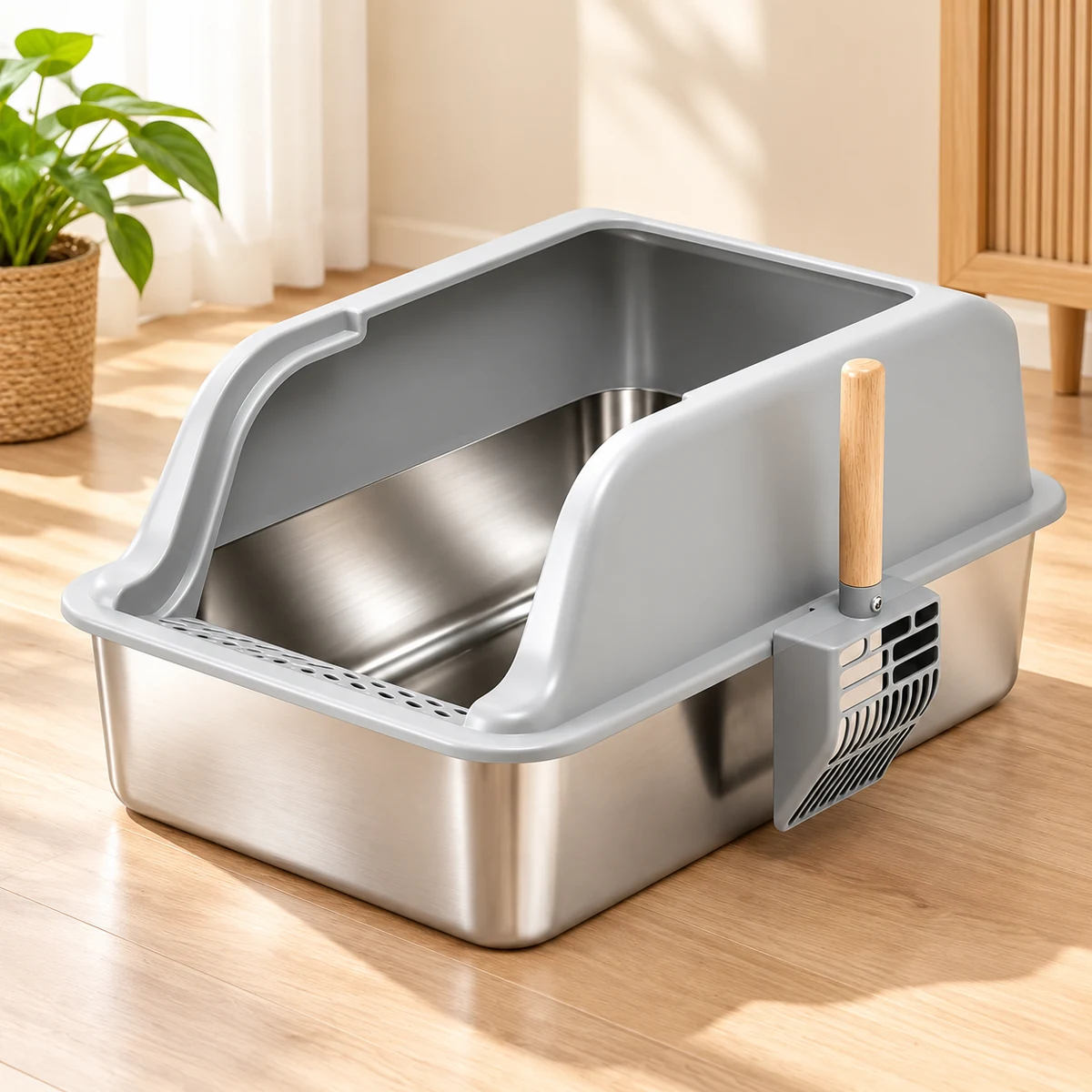
If you've ever scrubbed a plastic litter tray that still smells after a wash, you'll understand why so many Aussie cat owners are switching to a stainless steel cat litter box. Steel doesn't scratch the way plastic does, so there are no tiny grooves for urine and bacteria to hide in. It's easier to keep properly clean, it lasts for years, and the high-sided designs do a much better job of keeping litter in the box and off your floors. In this guide we'll walk through how stainless steel boxes compare with plastic and self-cleaning options, which size suits your cat, how to set one up so your cat actually uses it, and the cleaning routine that keeps smells away, even in a hot Australian summer.
Why plastic litter trays start to smell
Every time your cat digs, their claws leave fine scratches in a plastic tray. Over a few months those scratches build up, and urine soaks into them. Even a good scrub with hot water can't reach the bottom of every groove, so the tray keeps a faint smell that comes back as soon as it gets warm. That's why a plastic tray that seemed fine in winter can suddenly smell much stronger in January. Plastic can also stain, go cloudy and absorb the scent of cleaning products, which some cats dislike enough to start going elsewhere.
Stainless steel is non-porous. Claws can't dig into it, it doesn't absorb odours, and a quick wipe or wash gets it back to a genuinely clean surface. Think of the difference between a plastic chopping board and a stainless steel bench: one holds on to everything, the other wipes clean.
Stainless steel vs plastic vs self-cleaning: a quick comparison
- Plastic tray: cheapest to buy and light to move, but scratches, stains and holds smells. Most need replacing every 12 months or so.
- Stainless steel box: costs more up front, but doesn't scratch or absorb odours, is easy to sanitise, and can last for many years. High sides cut down on litter scatter and spraying.
- Self-cleaning (automatic) box: rakes or sifts waste for you, which suits busy households and multi-cat homes. It's the most expensive option, needs power and some cats take time to trust the moving parts. We've covered these in detail in our automatic cat litter box guide.
For most homes, a stainless steel box is the sweet spot: far easier to keep fresh than plastic, without the price and noise of an automatic unit.
Our stainless steel litter boxes
These are the stainless steel boxes we stock right now, all with free delivery Australia-wide. Two of them are on sale at the moment.
-
Sale!

Semi Enclosed Stainless Steel Cat Litter Box – Large
Original price was: $99.99.$92.58Current price is: $92.58. Add to cart -
Sale!
XXL Stainless Steel Cat Litter Box – Jumbo Set
Original price was: $132.99.$125.98Current price is: $125.98. Add to cart -
Sale!
Stainless Steel Cat Litter Box – Large High Sided Set
Original price was: $132.99.$125.69Current price is: $125.69. Add to cart
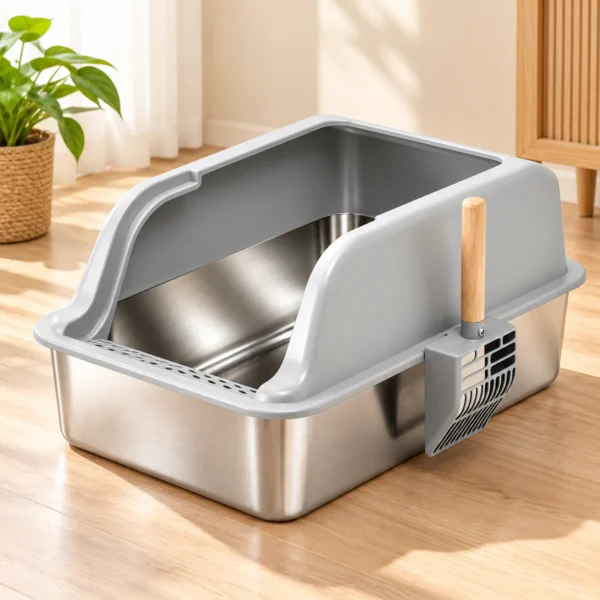
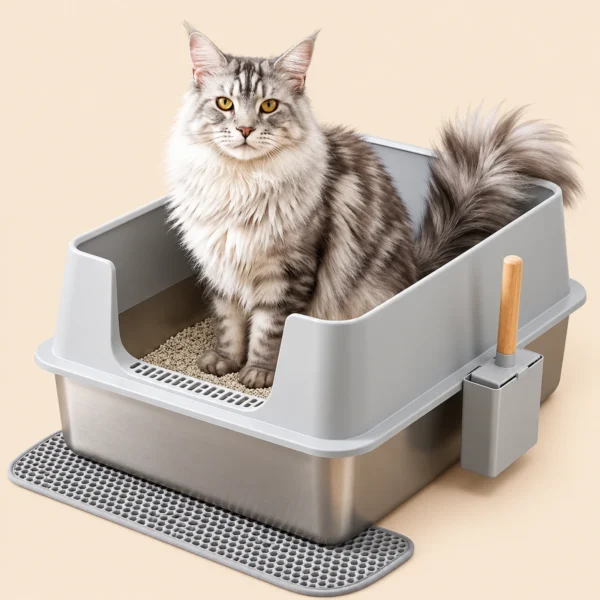
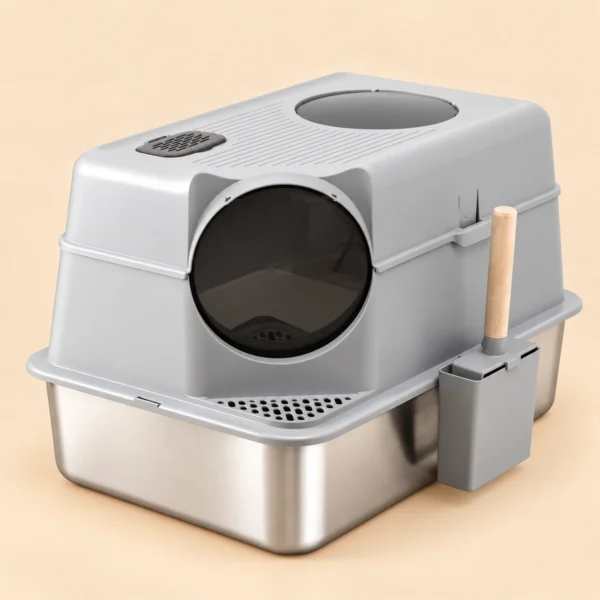
- Semi Enclosed Stainless Steel Cat Litter Box (Large): a great all-rounder. The partly covered design gives shy cats a bit of privacy and keeps litter in, while still being easy to scoop.
- XXL Stainless Steel Cat Litter Box (Jumbo Set): made for big cats like Maine Coons and Ragdolls, or for two cats sharing. Plenty of room to turn around and dig.
- Stainless Steel Cat Litter Box (Large High Sided Set): tall sides stop the high-peeing cats and the enthusiastic diggers from making a mess of the floor.
What size litter box does my cat need?
A simple rule vets often use: the box should be about one and a half times the length of your cat, measured from nose to the base of the tail. Most adult cats are comfortable in a large box, while big breeds and cats who like to turn several circles before they settle will be happier in an XL or jumbo size. If you're buying for a kitten, it's usually worth going straight to the adult size, as long as there's a low enough entry for little legs. That way you're not buying twice.
How many boxes? The general guide is one box per cat plus one extra. Two cats ideally means three boxes in different spots, so no one can block access and there's always a clean option.
High sides, semi-enclosed or open?
- High sides are best if your cat kicks litter everywhere or tends to pee high against the wall of the tray.
- Semi-enclosed designs suit cats who like a little privacy but get nervous in a fully covered box.
- Open, low-entry trays are kinder for kittens, seniors and cats with arthritis. If your older cat struggles with a tall box, an open top litter box with a wide entry is the gentler choice.
What to look for when buying a stainless steel litter box
- Grade of steel: look for food-grade or 304 stainless steel where it's listed. It resists rust and stays shiny with basic care.
- Smooth, rounded corners: sharp inside corners are where clumps get stuck. Rounded edges make scooping and wiping much quicker.
- Side height: around 15 cm suits most cats; go taller if your cat sprays or digs hard. Check the entry height too, especially for kittens and seniors.
- Non-slip base: rubber feet or a grippy base stop the box sliding on tiles and floorboards when your cat jumps in.
- What's in the set: some boxes come with a scoop, a lid or a litter mat. A complete set saves you buying extras separately.
- Room to dig: your cat should be able to stand, turn around and dig without hanging over the edge. If in doubt, size up.
Which cat litter works best in a steel box?
Almost any litter works in stainless steel, but a few types make life easier:
- Clumping clay or tofu litter: forms firm clumps that lift cleanly off the smooth steel, which is what makes daily scooping so quick.
- Paper or wood pellets: light and low-dust, and they don't stick to the base. Great if anyone in the house has allergies.
- Silica crystals: very absorbent and good at locking in smells, though some cats dislike the texture under their paws.
Whatever you choose, stick with it once your cat is happy. Sudden litter changes are one of the most common reasons cats start going outside the box. If you do want to change, mix the new litter in gradually over a week or two.
Where to put the litter box
Location matters as much as the box itself. Cats want somewhere quiet and safe, where they can see anyone coming. A laundry corner works if the machines aren't running constantly, and a spare bathroom or a quiet end of the hallway is often ideal. Avoid placing it right next to food and water, and in multi-storey homes put a box on each level so older cats don't have to manage the stairs in a hurry. If you live in an apartment, a semi-enclosed box tucked beside a cupboard keeps things tidy without your cat feeling boxed in.
How to switch your cat to a stainless steel box
Cats are creatures of habit, so a slow change works best. Here's what we recommend:
- Put the new box right next to the old one, in the same spot.
- Use the same litter your cat already knows. Changing the box and the litter at the same time is a common reason for accidents.
- Add a scoop of used litter from the old tray to the new box so it smells familiar.
- Once your cat is using the new box happily for a few days, remove the old tray.
- Keep the box somewhere quiet, away from food and water bowls and noisy appliances like the washing machine.
Most cats switch within a week. If yours is hesitant, give it a little longer before removing the old tray.
The cleaning routine that keeps smells away
- Daily: scoop clumps and waste at least once a day, twice in hot weather or with more than one cat.
- Weekly: top up litter to a depth of about 5 to 7 cm. Too little litter lets urine reach the base and pool.
- Every two to four weeks: empty the box completely, wash with warm soapy water, rinse well and dry before refilling. Steel dries in minutes.
- Avoid harsh smells: strong bleach or heavily scented cleaners can put cats off. Mild, unscented dish soap is all a steel box needs.
A double layer litter mat in front of the box catches the granules that stick to paws, so you're not finding litter in the hallway, and an enzyme-based urine stain and odour remover is handy for any accidents outside the box.
Keeping the litter box fresh in an Aussie summer
Heat makes every smell stronger, and humid weather in Brisbane, Sydney and up north can make litter clump on the base. In summer, scoop twice a day, keep the box out of direct sun and away from west-facing windows, and make sure the room has some airflow. A stainless steel box really earns its keep here, because it doesn't hold the warm-weather smell the way plastic does.
Signs it's time to talk to your vet
Changes in toilet habits can be a sign of a health problem, not a box problem. If your cat is straining, going more often than usual, crying in the box, peeing outside it, or you notice blood, please see your vet promptly. Urinary blockages, especially in male cats, can become an emergency quickly.
Frequently asked questions
Are stainless steel litter boxes better than plastic?
For most cats, yes. Stainless steel doesn't scratch or absorb odours, so it stays fresher, is easier to clean properly and lasts for years. Plastic is cheaper up front but usually needs replacing once it's scratched and starts to smell.
Do stainless steel litter boxes rust?
Good quality stainless steel is made to resist rust. Rinse and dry the box after washing, avoid leaving it soaking in water, and skip abrasive scourers that can damage the finish.
What size litter box is best for a large cat?
Choose a box about one and a half times your cat's body length. Big breeds like Maine Coons and Ragdolls are usually happiest in an XL or jumbo box with high sides.
How often should I clean a stainless steel litter box?
Scoop at least once a day (twice in summer or with multiple cats) and do a full empty and wash every two to four weeks with warm, soapy water.
Will my cat use a metal litter box?
Most cats switch easily, especially if you keep the same litter, add a little used litter to the new box and place it next to the old one for a few days.
Is a stainless steel box better than a self-cleaning one?
It depends on your household. A steel box is cheaper, quiet and has no moving parts. An automatic box saves daily scooping but costs more and some cats are wary of it. Many people use a steel box as their main box and add an automatic one later.
Do you deliver litter boxes Australia-wide?
Yes. Every order from The Little Nest comes with free delivery anywhere in Australia.
Ready for a litter box that stays fresh? Browse our full cat litter range, with free delivery Australia-wide.